

Energy Storage
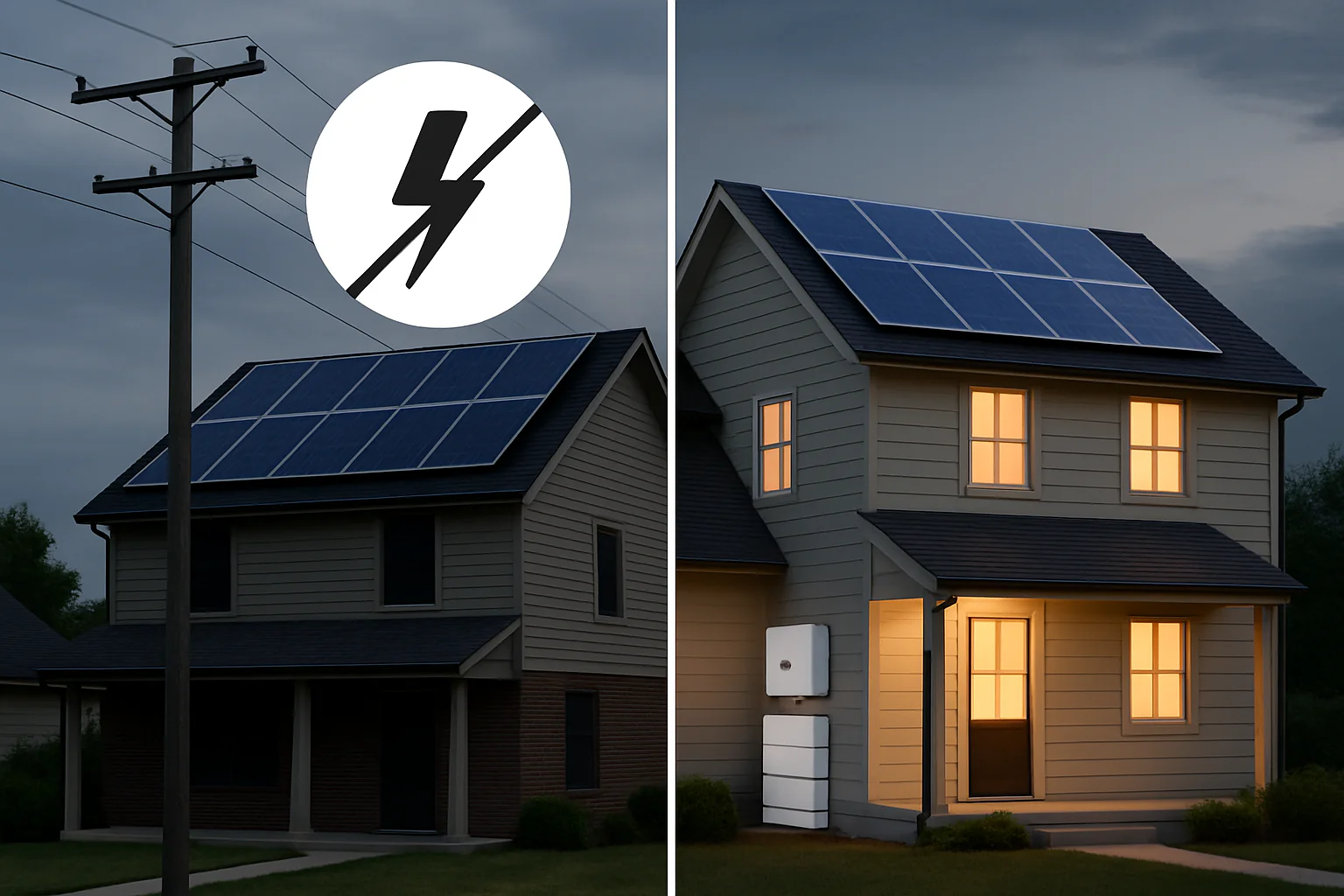
Why Energy Storage?
With reduced household investments, many people are looking to save money.
Yet climate change is causing more storms, heat waves, and power outages. Older homes are increasingly unable to withstand these conditions.
This is why energy storage has become essential: it keeps heating, cooling, and vital equipment running during a blackout.
A reliable storage solution protects your home and ensures your comfort in the face of an increasingly unpredictable climate and power grid.

Apartments
(Shared Battery Storage)
A centralized battery system installed in the building, allowing each unit to draw backup power during outages.
Large Residential Buildings
(Microgrid Storage System)
A larger community-scale battery providing peak-shaving, backup power, and optimized energy distribution for the whole complex.
Single-Family Homes
(Home Energy System)
A dedicated household battery that stores solar or grid energy, offering backup power and reducing electricity bills.
Green, Saving, Earning
Energy storage is both eco-friendly and cost-effective, and it can even generate income.
By capturing free clean energy, your storage system can send power back to the grid when demand is low, earning credits from the utility.
When demand is high, you use your stored energy to reduce your own electricity bill.
In extreme weather or outages, the system can power your home for half a day to a full day, keeping essential devices running until the grid is restored.
It’s a smart way to save money while protecting your home and the environment.

Solar Energy
(Solar Panels)
Captures sunlight and converts it into electricity to charge home batteries or supply household consumption.
Wind Energy
(Small Home Turbines)
Produces renewable electricity from wind to support home energy needs and charge storage systems.
Geothermal Heat Pumps
(Residential and Commercial)
Uses stable underground temperatures to provide efficient heating/cooling while lowering overall energy use.